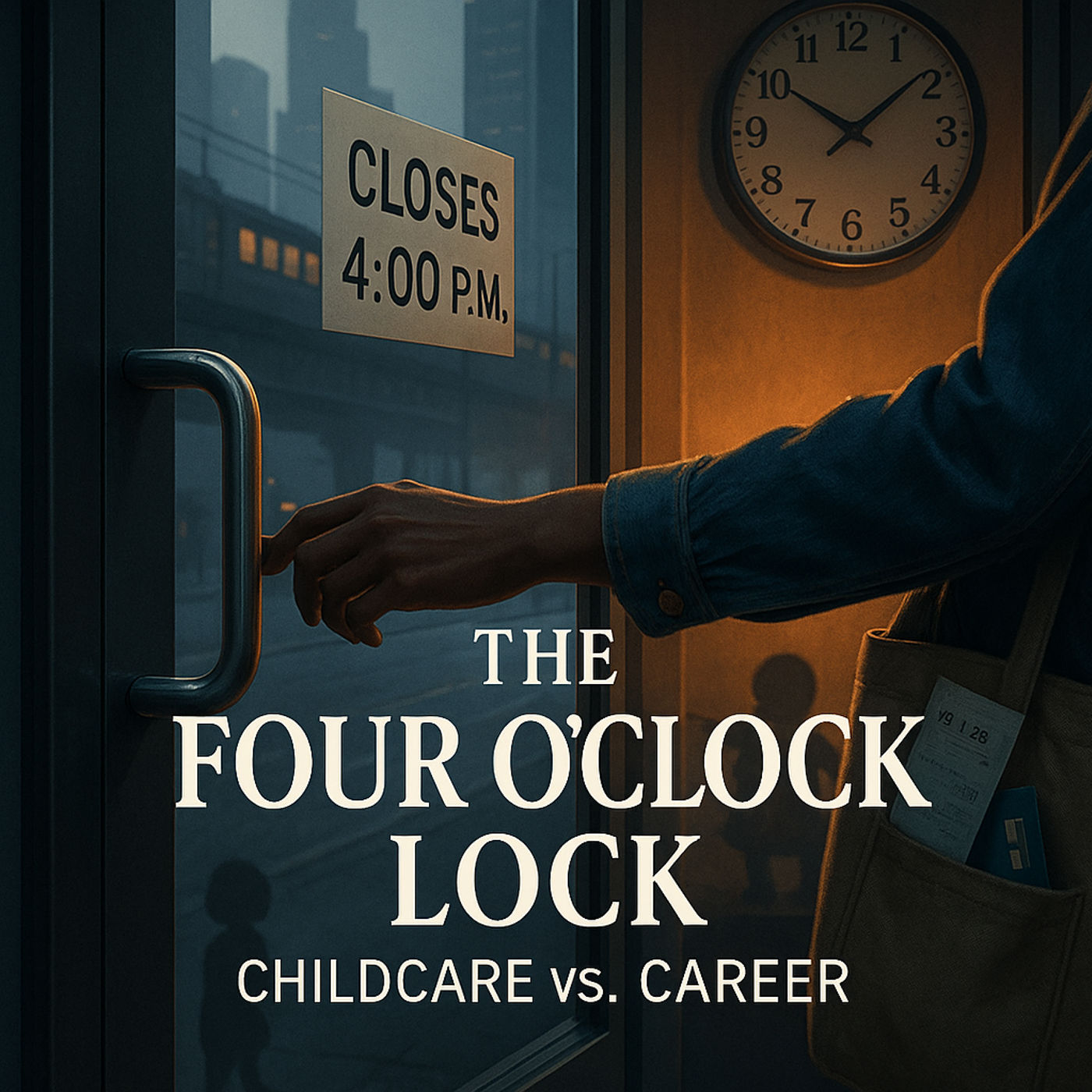
A locked door at four p.m. meets a company push for three days on site. The Four O’Clock Lock follows Nia, a Black mother who keeps a job, a paycheck, and her child safe while the numbers bite. Childcare runs 13,128 a year. Ten minutes past pickup brings a late fee. A stalled train turns a good meeting into a penalty. Presence gets praised. Outcomes pay the rent.
Nia runs the math by hand. Commute. Diapers. Parking. Backup help for twenty minutes on Thursdays. A center across town offers a later pickup, which requires two transfers and a gamble. Another teacher leaves for higher wages elsewhere. The director stays for the children and asks parents to pack patience along with snacks.
Leadership wants visibility. Nia gives results. Two slides carry risk and path. She sets terms that protect a seven thirty drop-off and a four p.m. exit, then proves value on the numbers. A neighbor covers the gap when the clock refuses to bend. HR finally puts the plan in writing.
This story shows the care economy from the kitchen table and the glass room. Child care deserts are not abstract here. Short hours and low pay shape each choice. Hope lives in small fixes that fit the door and the bus: early starts, clean targets, backup care, paid time for the people who teach our kids.
If your office changed rules this year, share what kept you in or pushed you out. The Trial of Woman tells these lives with respect, clear stakes, and real math.

This hardline investigative series exposes the silent pressure many women face in relationships where they become the emotional anchor for both partners. It follows...

The Emotional Cost of Always Being Needed is a first-person account of a Latina woman whose role as the reliable one quietly consumes her...

Loving a Man in Prison is a first-person account of a working-class woman whose life slowly narrows around an incarcerated partner. Told entirely from...