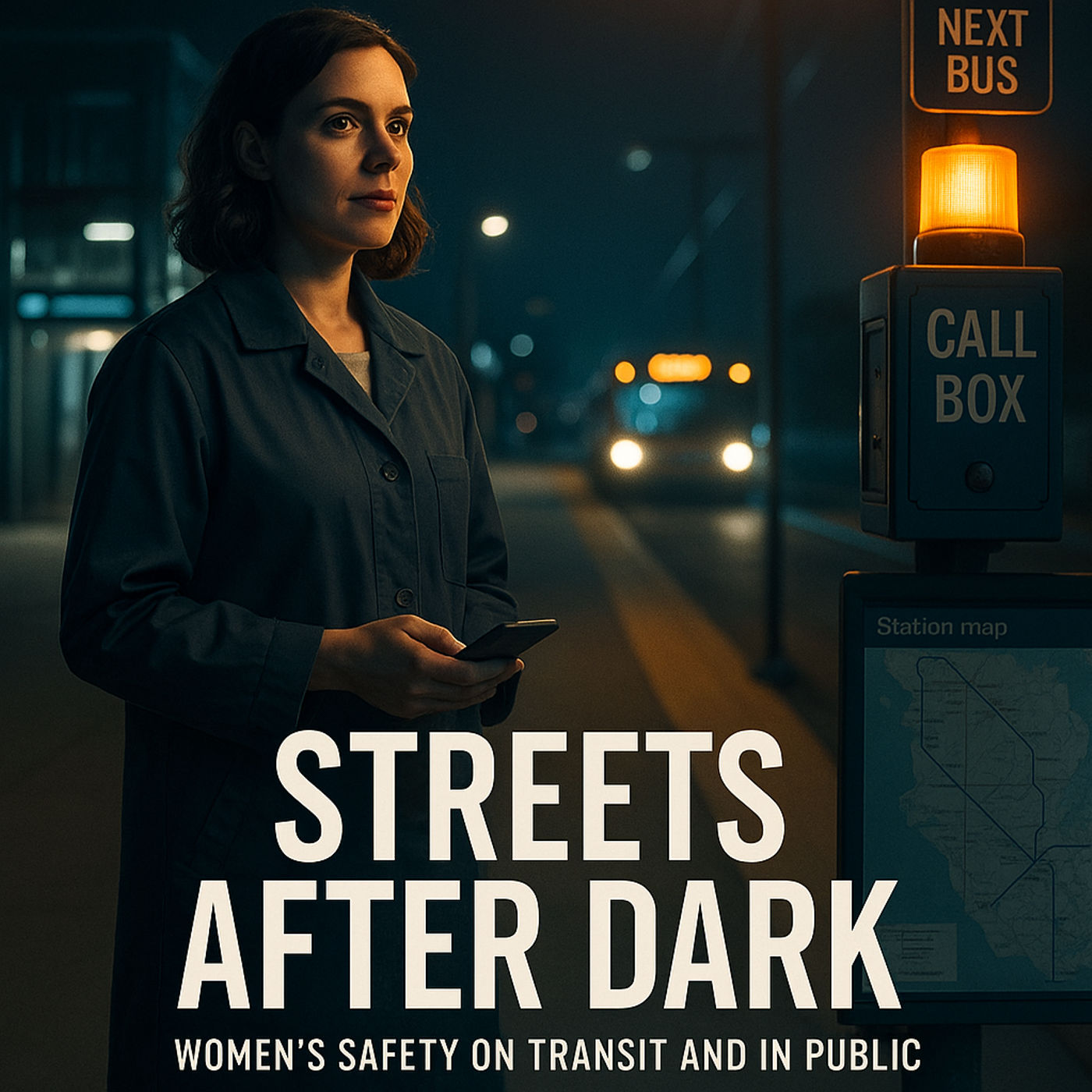
“Streets After Dark” follows a routine night commute to show how safety is felt—and how to improve it. Chapter 1 maps the chain of spaces a rider crosses after ten p.m.: platform, train, bus stop, and parking structure. Chapter 2 goes on the ground with students, service workers, operators, dispatch, cleaners, and maintenance to see what helps and what slips. Chapter 3 returns for before-and-after snapshots: steady lamps, clearer sightlines, posted staff loops, and a simple Next Bus display.
This series offers a practical playbook for agencies and riders: replace lamp failures fast, test help points daily, publish late-night loops by minute, send live voice updates when headways slip, and make the city–agency “first crew clears the hazard” rule real. Riders can use visible loops, share trip times, note car numbers, and keep bags anchored.
We close with four accountability numbers any rider can read: lamp uptime, help-point connect time, on-time headways after ten p.m., and staff passes per hour. Safety is not a promise at noon—it’s a loop kept at midnight.

In this hauntingly intimate episode of THE TRIALS OF WOMAN, we travel back to the 1940s American South to witness a silent revolution born...

Pipelines look healthy on paper. At the top, they thin fast. This series steps into succession meetings, calibration sessions, and board searches to track...

The scene unfolds in the dust-choked attic of Sarah Mitchell’s childhood home in Atlanta—a cramped, forgotten space where time itself seems to have stalled....